
Commercial Property Management Vancouver: Digital Strategy 2026
Master commercial property management Vancouver. Explore how 3D scanning, AI, and digital documentation maximize ROI and future-proof assets in 2026.
AS BUILT DOCUMENTATION
Emil Jordan
2/5/20267 min read
The commercial real estate landscape in British Columbia is undergoing a profound transformation, driven by technological integration and shifting market demands. For stakeholders navigating commercial property management in Vancouver, the era of relying on static, paper-based records is rapidly closing. As we move through 2025 and into 2026, the convergence of high-precision digital documentation, artificial intelligence (AI), and advanced PropTech is redefining how assets are built, maintained, and leased. Property owners and agents must now leverage data accuracy not just for operational efficiency, but as a critical strategy for asset valuation and risk mitigation.
In the competitive arena of commercial property management in Vancouver, the margin for error regarding square footage, lease administration, and compliance is disappearing. The integration of digital tools is no longer a luxury; it is a necessity for maximizing ROI and ensuring long-term viability. This article explores how the revolution in digital documentation - from 3D laser scanning services to AI-driven analytics - is reshaping the industry, providing a roadmap for professionals to stay ahead in Vancouver's dynamic market.
The digital paradigm shift in commercial property management in Vancouver
The economic indicators for the coming years suggest a market that is stabilizing yet demanding greater adaptability from landlords and operators. As inflation remains manageable and interest rates stabilize, the focus in commercial property management in Vancouver is shifting from crisis response to sustainable growth and strategic foresight. However, this stability does not imply stagnation; rather, it highlights a bifurcation in asset performance where technologically advanced, data-rich properties outperform legacy assets.
Digital transformation is moving beyond mere adoption to deep integration. Successful property managers are connecting disparate tools into seamless operational ecosystems where finance, leasing, and facilities management communicate through a single framework. At the heart of this ecosystem lies accurate data. Without precise physical data regarding a building's existing conditions, even the most sophisticated management software cannot function at optimal capacity.
For commercial property management in Vancouver, this means the digitization of physical assets is the first step toward modernization. The ability to visualize and analyze portfolio performance through digital twins and accurate datasets enables managers to anticipate market changes and align operational models accordingly. This level of strategic agility is essential in a market where tenant priorities are shifting toward flexibility, sustainability, and tech-enabled spaces.
The role of accurate floor plans in asset valuation
One of the most persistent challenges in real estate is the discrepancy between historical blueprints and the current reality of a built environment. Renovations, unrecorded alterations, and legacy errors often mean that the leasable area on paper does not match the physical asset. In the realm of commercial property management in Vancouver, establishing accurate floor plans is the baseline for revenue assurance.
Digitizing static blueprints into searchable, collaborative digital records is critical for maximizing the value of square footage. Precise measurements ensure that common area maintenance (CAM) charges are allocated correctly and that landlords are capturing the full revenue potential of their gross leasable area. Furthermore, in an environment where regulatory compliance regarding building safety and environmental reporting is tightening, having verifiable spatial data is a requisite for risk management.
Leveraging 3D laser scanning services for precision
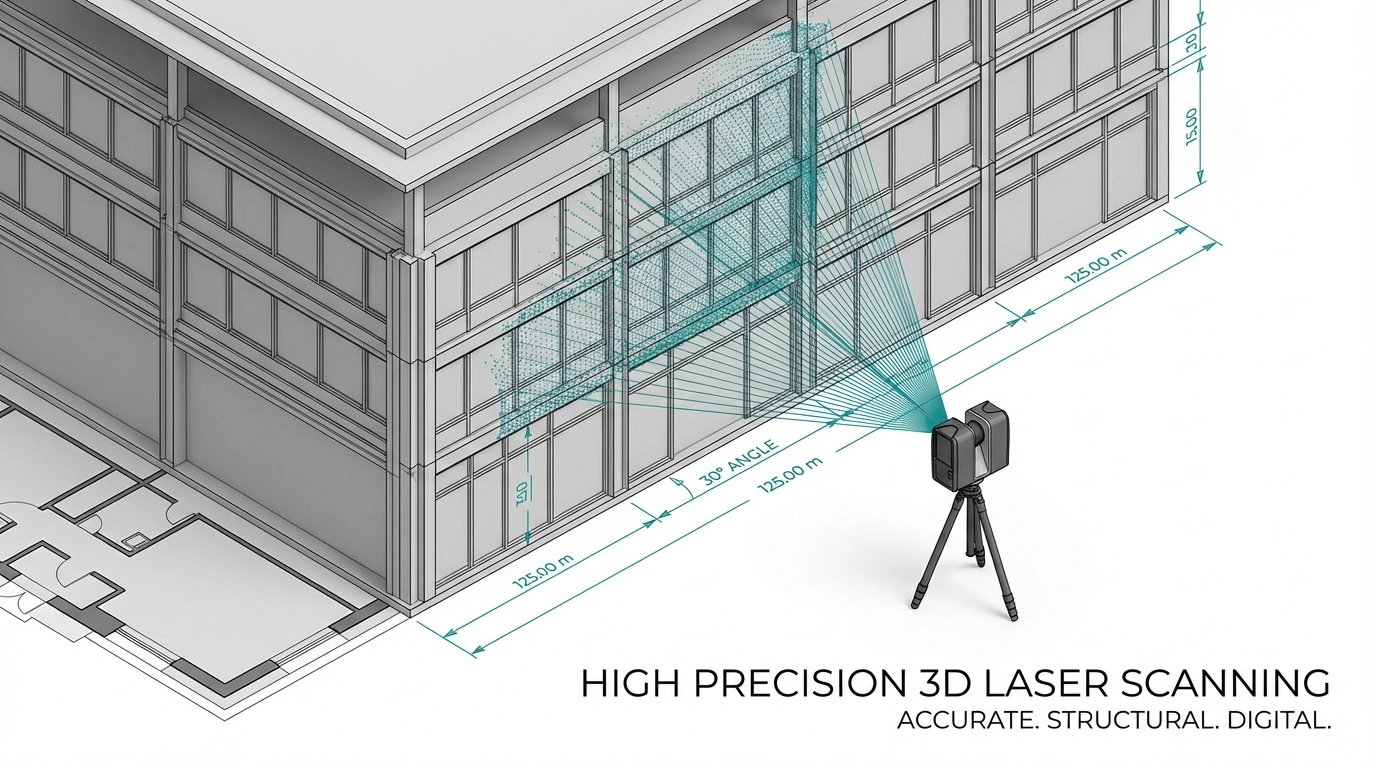
To achieve the level of accuracy required for modern commercial property management in Vancouver, industry leaders are turning to 3D laser scanning services. Technologies such as LiDAR (light detection and ranging) and high-fidelity scanners like the Trimble X12 or Matterport Pro3 capture millions of data points to create an exact digital replica of a property.
From physical to digital: the scan-to-BIM workflow
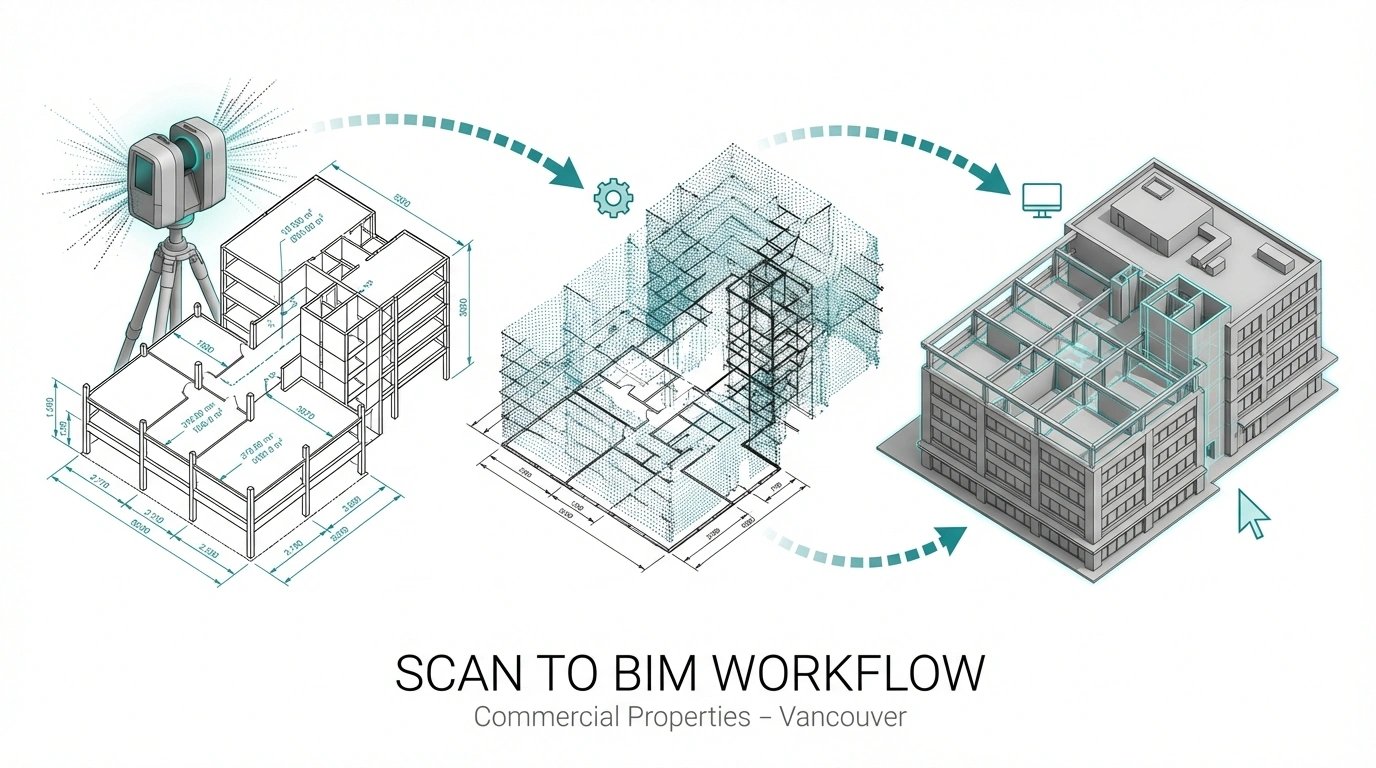
The application of 3D laser scanning services facilitates a "scan-to-BIM" (building information modeling) workflow. This process converts point cloud data into detailed 3D models that serve as a single source of truth for architects, engineers, and facility managers. For commercial property management in Vancouver, this technology offers immediate benefits:
As-built verification: it provides a definitive record of existing conditions, eliminating the guesswork often associated with older Vancouver stock, particularly in heritage or retrofitted buildings.
Conflict detection: by identifying structural anomalies or mechanical clashes digitally before renovation begins, owners avoid costly change orders during construction.
Virtual access: stakeholders can tour and inspect properties remotely, a capability that enhances decision-making speed and reduces travel costs for investors and dispersed teams.
The adoption of these technologies aligns with broader industry trends where investors prioritize solutions that deliver immediate operational efficiencies and measurable ROI. By utilizing 3D laser scanning services, property managers in Vancouver ensure they are working with data that meets professional-grade standards, essential for high-stakes commercial developments.
Streamlining renovation planning and execution
Vancouver's commercial sector is currently seeing a "flight to quality," where tenants gravitate toward premium, modern office spaces, leaving older class B and C buildings to struggle with higher vacancy rates. To remain competitive, commercial property management in Vancouver must prioritize strategic renovations. Renovation planning based on precise digital documentation significantly reduces the risks associated with retrofitting existing structures.
Integrating construction documentation
Successful repurposing of commercial space relies heavily on the quality of construction documentation. When a property manager or owner possesses a digital twin of their asset, generating detailed building permit drawings becomes a streamlined process. This is particularly relevant in Vancouver, where adherence to the BC building code and municipal bylaws regarding seismic upgrades and energy efficiency is strictly enforced.
Digital tools allow for the rapid creation of:
Reflected ceiling plans (RCP): critical for lighting and HVAC upgrades.
Electrical and power plans: essential for modern tenants with high power requirements, such as tech firms or data centers.
Egress and safety plans: ensuring compliance with fire codes and safety regulations.
By maintaining up-to-date construction documentation, property managers can expedite the permitting process, reducing the downtime between tenancies and accelerating the time-to-revenue for renovated units.
Empowering industry professionals: architects and designers
The revolution in commercial property management in Vancouver is also redefining the relationship between property managers and the design professionals they hire. Providing architects and interior designers with high-quality digital assets enables them to work more effectively.
Advanced interior designer tools
For creative professionals, interior designer tools are only as good as the base data they utilize. When property managers provide accurate floor plans generated from laser scans, designers can:
Visualize spatial relationships accurately in 3D.
Plan fit-outs that maximize space utilization for hybrid work models.
Create immersive visualizations for prospective tenants, helping them envision their brand in the space before a lease is signed.
Sharpening contractor estimates
Unforeseen conditions are the primary cause of budget overruns in construction. By providing contractor estimates based on verified existing conditions rather than outdated drawings, property managers can secure more accurate pricing. This transparency builds trust between owners and contractors and ensures that capital expenditure budgets are adhered to. In commercial property management in Vancouver, where construction costs remain high, this level of fiscal control is invaluable.
Integrating PropTech for operational excellence
The data gathered through scanning and documentation does not sit in a silo; it fuels the next generation of property management software. Platforms like Yardi, MRI Software, and Buildium are evolving to integrate this physical data into their operational workflows.
The intersection of AI and property management
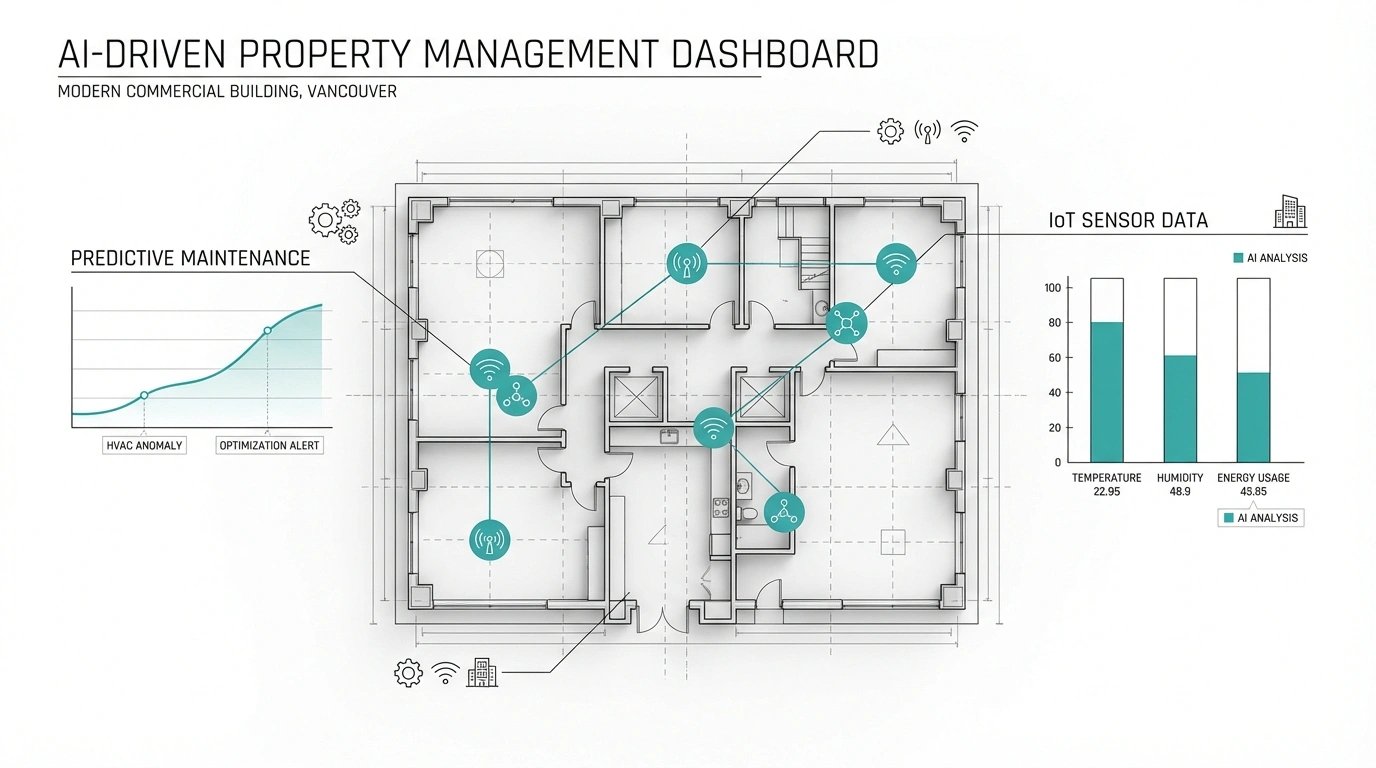
Artificial intelligence is playing an increasingly pivotal role in commercial property management in Vancouver. AI tools are being used to structure data from documents, generate property marketing materials, and transform the request-for-proposal process. More importantly, AI-driven predictive analytics can utilize data from building sensors and digital models to anticipate maintenance requirements months in advance.
For example, connecting IoT (internet of things) sensors to a digital building model allows managers to monitor energy usage and equipment health in real-time. This moves maintenance strategies from reactive to predictive, significantly reducing emergency repair costs and extending the lifespan of building assets.
Enhancing tenant experience and retention
In a market where tenant expectations are rising, the digital experience is a key differentiator. Tenants now demand seamless, tech-enabled interactions with their property managers. Commercial property management firms in Vancouver are utilizing self-service portals and mobile apps that allow tenants to:
Submit maintenance requests.
View lease documents and real estate floor plans.
Book amenities and manage visitor access.
Transparency is critical. Detailed service charge statements and real-time updates build trust and improve retention rates. By using software that integrates real estate floor plans and lease data, managers can provide precise, itemized breakdowns of costs, which is essential for maintaining tenant satisfaction in a competitive leasing market.
Future-proofing assets in the greater Vancouver market
The Vancouver market faces unique challenges, including land constraints, strict zoning, and a focus on sustainability. Commercial property management in Vancouver must be forward-looking, anticipating trends such as the conversion of underutilized office space into residential or mixed-use developments.
Adaptive reuse and mixed-use developments
As the office market recalibrates, converting commercial spaces to meet the surging demand for housing is a topic of intense discussion. However, conversion is complex. Only a small percentage of office buildings are prime candidates for conversion due to floor plate depths and plumbing constraints. High-quality as-built documentation is the first step in assessing the feasibility of such projects, allowing architects to analyze the structure's potential for home renovation projects in greater Vancouver within a commercial context.
Sustainability and compliance
With Vancouver's focus on green buildings and the "net zero" initiatives, property managers must track and report on ESG (environmental, social, and governance) metrics. Digital documentation supports this by providing the data needed to calculate carbon footprints and plan energy retrofits. Commercial property management in Vancouver is increasingly judged by operational efficiency and ESG compliance, making data accuracy a cornerstone of asset value.
Strategic advantages of digital documentation
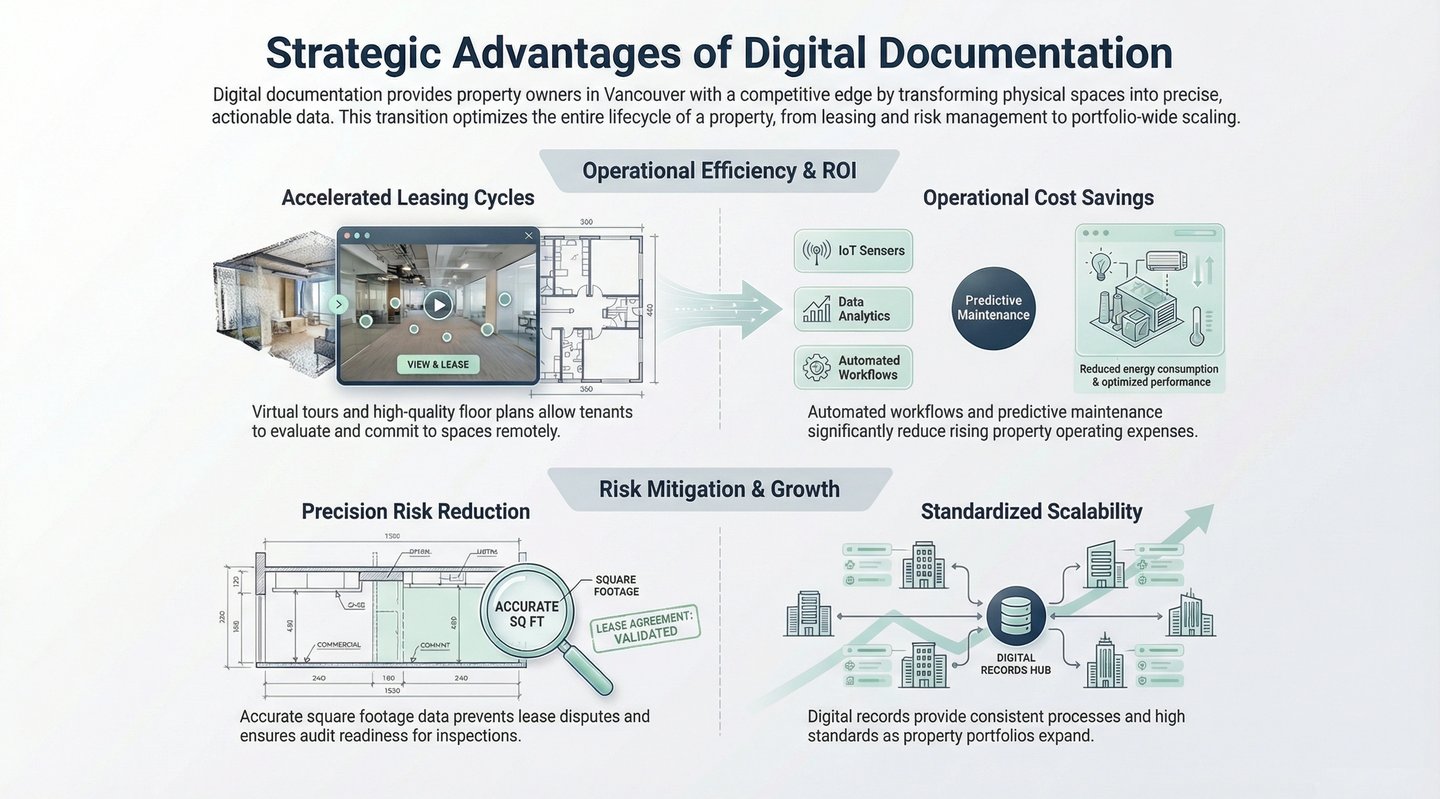
For owners and property managers in Vancouver, investing in digital documentation offers distinct strategic advantages:
1. Accelerated leasing cycles: high-quality real estate floor plans and virtual tours allow prospective tenants to evaluate spaces remotely, speeding up the decision-making process.
2. Risk reduction: accurate data mitigates the risk of lease disputes over square footage and ensures readiness for audits and inspections.
3. Scalability: as portfolios grow, having standardized digital records ensures consistent processes and high standards across all operations.
4. Cost savings: automated workflows and predictive maintenance reduce operational costs, a crucial factor as operating expenses continue to rise.
Conclusion: the digital thread of value
The revolution in commercial property management in Vancouver is not merely about adopting new gadgets; it is about establishing a "digital thread" of value that runs through the entire lifecycle of an asset. From the initial 3D laser scanning services that capture the reality of the built environment to the AI-driven software that manages daily operations, accurate data is the currency of modern real estate.
By embracing accurate floor plans, detailed construction documentation, and integrated PropTech solutions, property managers can transform their operations from reactive to proactive. They can empower their partners with better interior designer tools and contractor estimates, ensuring projects are delivered on time and on budget.
As Vancouver continues to evolve as a global hub for commerce and technology, the buildings that thrive will be those managed with intelligence, precision, and a commitment to digital excellence. For stakeholders in commercial property management in Vancouver, the message is clear: the future belongs to those who measure, document, and manage with digital precision.
Contact us
MeasureBuilt
Address
413-8188 Manitoba Street
Vancouver, BC V5X 4L8
Contacts
236-232-3335
emil@measurebuilt.com
When Details Matter!